Hair holds a significant place in how many women experience their identity and wellbeing, which makes it a topic where misinformation causes genuine distress. Understanding the biology of hair (how it grows, why it falls out, and what actually affects its health) provides a more rational foundation for making decisions about care and treatment.
The Biology of the Hair Follicle
Hair growth is not continuous. Each follicle operates on an independent cycle with three main phases:
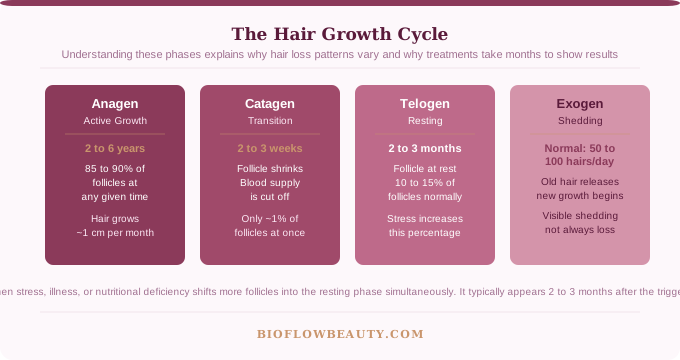
Anagen is the active growth phase, lasting two to seven years in scalp hair. The length of this phase is genetically determined and is the primary factor in maximum achievable hair length. Approximately 85 to 90 percent of scalp follicles are in anagen at any given time.
Catagen is a brief transitional phase lasting two to three weeks, during which the follicle shrinks and detaches from its blood supply.
Telogen is the resting phase, lasting two to four months, after which the hair is shed and the follicle re-enters anagen. Approximately 50 to 100 hairs per day are shed in normal telogen cycling.
Understanding this cycle matters because many conditions that cause apparent hair loss actually disrupt the timing of the cycle rather than destroying follicles. Follicles that are cycling abnormally can often return to normal function when the underlying cause is addressed.
This distinction between disrupted cycling and actual follicle destruction has a specific anatomical basis worth understanding. Each follicle contains a region called the bulge, located roughly midway down the follicle, which houses a population of hair follicle stem cells. As long as the bulge remains intact, a follicle retains the capacity to regenerate and produce hair again, even after a period of inactivity or miniaturization. This is precisely why telogen effluvium, where the cycle is disrupted but the follicle structure including the bulge survives, is reversible, while scarring forms of alopecia, where inflammation destroys the bulge and the surrounding follicular structure permanently, are not. The practical implication is that the earlier a scarring process is identified and treated, the more follicles retain their regenerative capacity, which is part of why dermatologists emphasize prompt evaluation of any hair loss accompanied by visible scalp inflammation, redness, or scarring rather than assuming it will resolve on its own.
Why Women Lose Hair: The Main Causes
Female Pattern Hair Loss and Its Presentation

Female pattern hair loss (FPHL), also called androgenetic alopecia, is the most common cause of hair loss in women. Unlike the receding hairline typical in men, FPHL in women typically presents as diffuse thinning over the crown and top of the scalp, with the frontal hairline often preserved.
The underlying mechanism involves sensitivity of hair follicles to dihydrotestosterone (DHT), a metabolite of testosterone. Affected follicles progressively miniaturize, producing thinner, shorter hairs over successive cycles until they stop producing visible hair altogether.
FPHL has a strong genetic component and becomes more common after menopause as the protective effects of estrogen decline. It is not caused by the hair care practices most commonly blamed for it.
Telogen Effluvium
Telogen effluvium is a diffuse, temporary hair loss caused by a disruption to the hair cycle that pushes a large proportion of follicles prematurely into telogen. The shedding typically begins two to four months after the triggering event, which is why the connection is often missed.
Common triggers include significant physical or psychological stress, major illness or surgery, rapid weight loss or severe caloric restriction, nutritional deficiencies (particularly iron and zinc), thyroid dysfunction, postpartum hormonal changes, and discontinuation of hormonal contraceptives.
Because the follicles themselves are intact, telogen effluvium typically resolves when the underlying cause is addressed, though full regrowth may take six to twelve months.
Postpartum Hair Loss: A Closer Look
Postpartum hair loss is common enough, affecting roughly one-third to one-half of new mothers to a noticeable degree, that it deserves its own explanation rather than being treated as just one item on a list of telogen effluvium triggers.
During pregnancy, elevated estrogen prolongs the anagen growth phase, which is why many women experience thicker, fuller hair throughout pregnancy than they are used to. This is not actually new hair growth; it is existing hair that would normally have cycled into the resting phase being held in growth phase for longer than usual. After delivery, estrogen and progesterone drop sharply within days, while prolactin rises to support milk production. This combination pushes a large proportion of those overdue follicles into the catagen and then telogen phase simultaneously, rather than on their normal staggered schedule.
The timing of the visible shedding is what catches most women off guard. Because of the lag built into the hair cycle, the synchronized shift into telogen does not produce visible shedding immediately. Onset typically begins around two to three months postpartum, peaks around four to five months, and resolves by roughly eight months in most women, though breastfeeding can extend the timeline since continued prolactin elevation delays the return to baseline hormone levels. A woman noticing dramatic shedding four months after delivery is not experiencing a new problem; she is experiencing the delayed consequence of a hormonal shift that already happened months earlier. Understanding this timeline alone resolves a significant amount of the anxiety that accompanies postpartum shedding, since the alarming clump of hair in the shower is the predictable tail end of a normal physiological process rather than a sign that something has gone wrong.
PCOS and Hair Loss

Polycystic ovary syndrome is a relevant cause of hair thinning for a meaningful subset of women, and it is worth discussing on its own terms because the relationship is more nuanced than it is often presented.
A study examining 254 women diagnosed with PCOS under the Rotterdam criteria found that 22% had clinically identifiable androgenetic alopecia, a rate higher than expected in the general female population and associated with a higher likelihood of other signs of androgen excess such as acne and hirsutism. This androgen-driven hair loss in PCOS works through the same DHT-mediated follicle miniaturization process described earlier in female pattern hair loss generally, amplified by the higher circulating androgen levels characteristic of the condition.
The honest caveat, and one that matters for anyone trying to interpret their own hair loss, is that the relationship between hair thinning and measurable androgen excess in women is genuinely inconsistent. A substantial proportion of women with the classic frontal-central thinning pattern have entirely normal circulating androgen levels and no other signs of hyperandrogenism, which means hair loss alone is not a reliable standalone indicator of PCOS. For women experiencing both hair thinning and other PCOS-associated symptoms, including irregular periods, acne, or excess facial or body hair, that combination is worth raising with a physician, since the appropriate treatment approach, often including anti-androgen medication or metformin for the underlying insulin resistance many women with PCOS also have, differs meaningfully from the management of hair loss without an androgen excess component.
Nutritional Deficiencies
Several nutritional deficiencies are specifically associated with hair loss in women. Iron deficiency is the most clinically relevant, given how common it is in premenopausal women. Serum ferritin below 30 ng/mL is associated with hair shedding even in the absence of frank anemia. Zinc, biotin, vitamin D, and protein deficiency can also contribute.
It is worth noting that biotin supplementation for hair loss is heavily marketed but only evidence-based in individuals with confirmed biotin deficiency, which is rare in the general population. Supplementing biotin in the absence of deficiency does not produce meaningful hair growth benefits according to the available literature.
💇 Biotin + Collagen Complex If blood work shows biotin deficiency contributing to hair loss, targeted supplementation is warranted. Collagen provides the amino acid precursors for keratin synthesis. Most effective when there is an identified nutritional deficiency rather than as a general hair growth strategy.
Check Biotin + Collagen on Amazon →
What the Evidence Supports for Treatment
Minoxidil is the most evidence-based topical treatment for female pattern hair loss and is available without prescription. It works by prolonging the anagen phase and increasing follicle size. Response requires consistent use for at least six months before meaningful assessment is possible, and the effect is maintained only with continued use. A 2 percent or 5 percent formulation applied once daily has demonstrated efficacy in randomized controlled trials.
🌱 Minoxidil 2% (Women's Formula) The most evidence-backed topical treatment for female pattern hair loss, with multiple randomized controlled trials confirming efficacy for increasing hair density. Results require consistent daily use for at least 6 months before meaningful assessment.
Check Minoxidil Women's Formula on Amazon →Addressing underlying causes is the most important intervention for telogen effluvium. Correcting iron deficiency, treating thyroid dysfunction, managing stress, and ensuring adequate protein and caloric intake are the first-line approaches and frequently sufficient for recovery.
Low-level laser therapy (LLLT) devices have accumulated a modest evidence base for FPHL, with several trials showing improvements in hair density. The proposed mechanism involves stimulation of mitochondrial activity in follicular cells. Results are variable, and the evidence, while promising, is not as robust as for minoxidil.
Platelet-rich plasma (PRP) injections involve concentrating growth factors from the patient’s own blood and injecting them into the scalp. Early evidence is positive, but study quality varies and standardization of protocols is lacking. It is a reasonable option to discuss with a dermatologist for those who have not responded to first-line treatments.
Oral spironolactone, though technically a diuretic, is prescribed off-label as an anti-androgen for female pattern hair loss, particularly when there is an androgen excess component such as PCOS. A 2023 systematic review and meta-analysis pooling the available trial data found an overall improvement rate of 56.6% among women treated with oral spironolactone, with notably higher response rates when combined with topical minoxidil (65.8%) compared to spironolactone alone (43.2%). A subsequent randomized, double-blind, placebo-controlled pilot study in premenopausal women similarly found significantly greater increases in hair density and diameter with spironolactone plus minoxidil compared to minoxidil alone. Side effects, including menstrual irregularity, breast tenderness, and dizziness, are generally mild and dose-dependent, though it requires periodic blood monitoring for potassium levels and is not safe during pregnancy. This makes it a reasonable option to discuss with a dermatologist for women whose hair loss has a clear androgen-driven component, rather than a first-line treatment for telogen effluvium or non-hormonal causes.
Hair Dye: What the Science Says
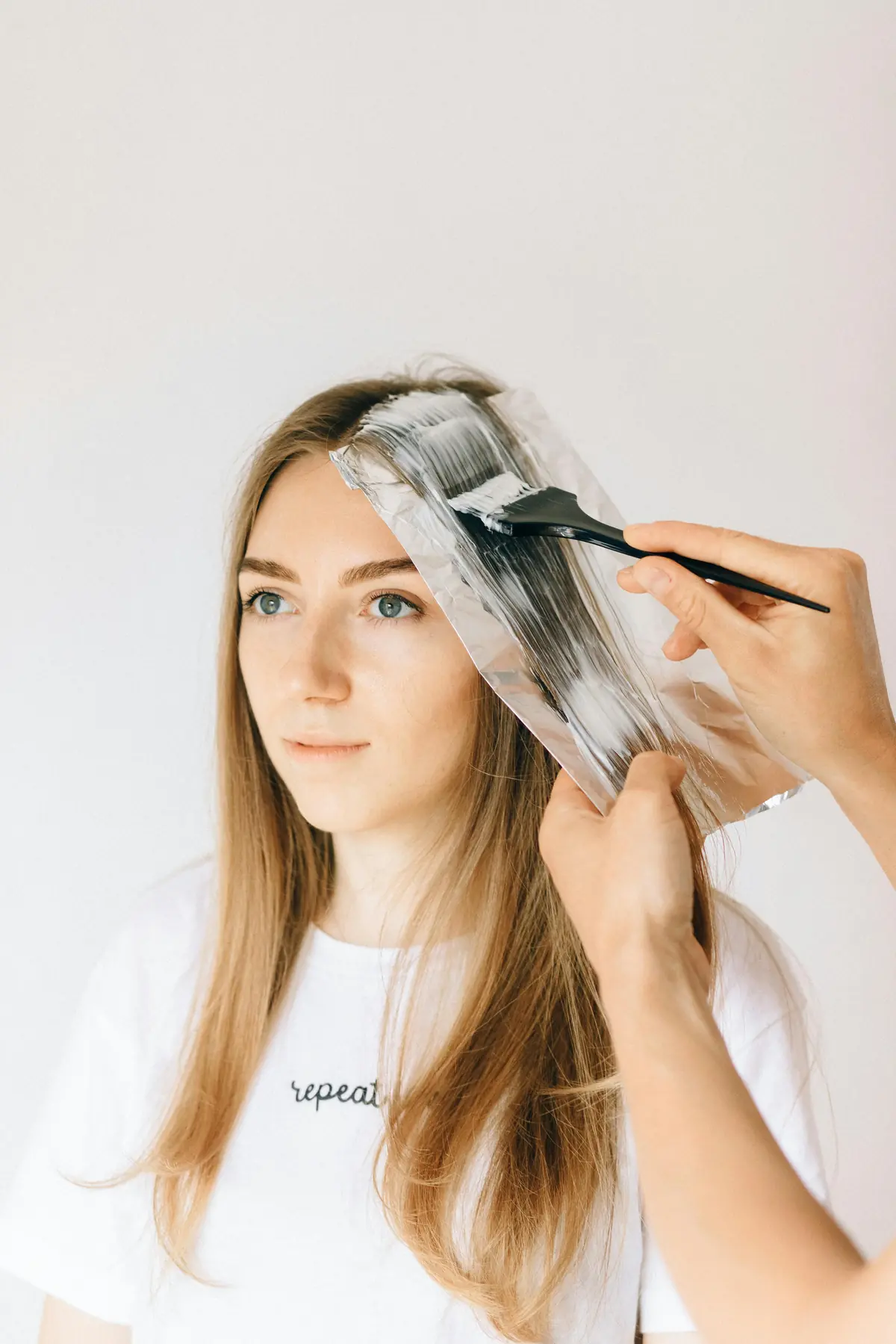
Permanent hair dyes work through an oxidative chemical process. Hydrogen peroxide opens the cuticle and oxidizes melanin, while colorants penetrate the cortex and form larger molecules that are trapped within the hair shaft as the cuticle closes.
The key chemicals of concern are p-phenylenediamine (PPD) and related aromatic amines. PPD is the most common cause of allergic contact dermatitis from hair dye, and sensitization can develop even after years of use without reaction. Once sensitized, reactions can be severe. A patch test 48 hours before each application is standard dermatological advice and genuinely important, not just a precaution on a label.
Regarding cancer risk: some epidemiological studies have found associations between frequent hair dye use and bladder cancer or non-Hodgkin lymphoma, particularly in hairdressers with occupational exposure. The evidence for consumers who dye their hair periodically is less consistent, and where associations are found, absolute risk differences are small. The International Agency for Research on Cancer (IARC) classifies occupational exposure to hair dye as probably carcinogenic but does not classify personal use in the same category.
Ammonia-free and semi-permanent dyes generally carry lower sensitization risk because they do not use PPD in the same concentrations, but they may contain related compounds and are not risk-free.
Heat Styling: The Mechanism of Damage

Hair is composed primarily of keratin, a protein arranged in a helical structure stabilized by hydrogen bonds and disulfide bridges. Heat disrupts these bonds.
At temperatures above 150 degrees Celsius, hydrogen bonds in the hair shaft break and reform in new configurations as the hair cools, which is the mechanism by which heat styling changes curl pattern temporarily. Above 230 degrees Celsius, irreversible changes to the keratin structure occur, and at very high temperatures, the cortex can develop bubbles as water within the shaft vaporizes rapidly, a phenomenon called bubble hair, which causes brittle, breakage-prone strands.
The practical guidance from the evidence:
Using heat protectant products reduces thermal damage by forming a barrier and increasing the temperature at which structural changes occur. They do not eliminate damage but measurably reduce it.
Lower heat settings achieve styling results with less damage. Most styling goals can be achieved at temperatures below 180 degrees Celsius.
Applying heat to wet hair causes more damage than applying it to dry hair, because water within the shaft vaporizes rapidly at lower temperatures when the shaft is saturated.
Regular heat styling without protective measures cumulatively degrades the cuticle and cortex, leading to increasing porosity, frizz, and breakage over time.
Scalp Health as the Foundation

The scalp is skin, and its health directly affects follicle function. Chronic scalp inflammation, excess sebum, or conditions like seborrheic dermatitis create an environment that is suboptimal for hair growth.
Regular gentle cleansing appropriate to scalp type removes sebum, product buildup, and environmental residue that can clog follicles. Over-washing strips the scalp of protective oils and disrupts the microbiome; under-washing allows buildup that contributes to inflammation.
Scalp massage has a modest evidence base for increasing hair thickness, proposed to work through mechanical stimulation of follicular cells. It is low-risk and inexpensive enough to incorporate as a routine practice.
Air pollution is a less commonly discussed but genuinely relevant factor for women in urban environments. Particulate matter and other airborne pollutants settle on the scalp throughout the day and have been associated with increased oxidative stress in follicular tissue and disruption of normal hair protein expression, contributing to hair that is more fragile and prone to shedding over time independent of any internal hormonal or nutritional cause. This is one more reason that regular, gentle cleansing matters beyond simple aesthetics: it is removing a genuine source of cumulative follicular stress, not just visible buildup.
References:
- van Zuuren EJ, et al. (2016). Interventions for female pattern hair loss. Cochrane Database of Systematic Reviews, 5, CD007628. PubMed
- Rajput R. (2015). Understanding hair loss due to air pollution. International Journal of Trichology, 7(3), 96. ResearchGate
- Almohanna HM, et al. (2019). The role of vitamins and minerals in hair loss. Dermatology and Therapy, 9(1), 51-70. PubMed
- Mirallas O, Grimalt R. (2016). The postpartum telogen effluvium fallacy. Skin Appendage Disorders, 1(4), 198-201. PubMed
- Quinn M, Shinkai K, Pasch L, Kuzmich L, Cedars M, Huddleston H. (2014). Prevalence of androgenic alopecia in patients with polycystic ovary syndrome and characterization of associated clinical and biochemical features. Fertility and Sterility, 101(4), 1129-1134. PubMed
- Aleissa M, et al. (2023). The efficacy and safety of oral spironolactone in the treatment of female pattern hair loss: a systematic review and meta-analysis. Cureus. PubMed
For more on the nutritional and hormonal factors that affect hair and overall women’s health, explore the related articles on BioFlowBeauty.